
KyFx Feature
Is Ari Aster Okay? A Love Letter to Hereditary and Midsommar.
SPOILER ALERT
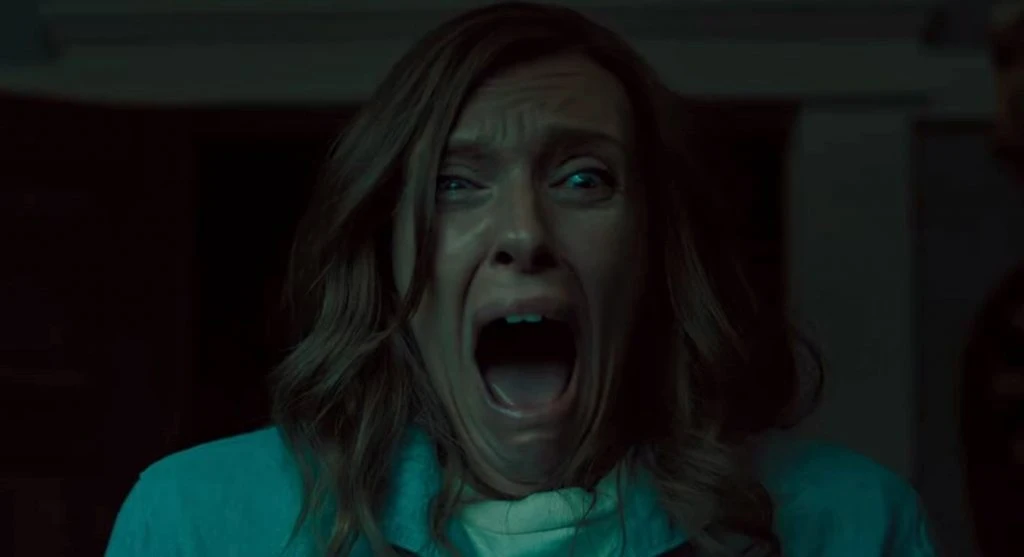
Hereditary A24
by Kyasia Fields on September 25
It is no secret that Filmmaker Ari Aster unknowingly shook the internet to its core in 2017 when his 2011 graduate thesis short film The Strange Thing About The Johnsons went viral on social media. The taboo and outlandish subject matter of the film created commentary and growing concern regarding the lengths at which films could go. In an interview with Shadow and Act, Aster notes the idea of incestuous sexual abuse in which the son is the offender, and the father is the victim stemmed from a discussion regarding “topics that are too taboo to be explored, and so we arrived at taboos that weren’t even taboos because they were so unfathomable.” The film received slight backlash with the subject matter surrounding an African American family, but Aster assured that the family’s race played no specific part to the concept. Watching the film in college, I can recall the emptiness and disturbance felt afterwards, a feeling that grew familiar with his filmography advancements. After discovering The Strange Thing About The Johnsons, I still was not as familiar with Aster and his work until Hereditary’s buzz hit my Twitter feed. The praise and adulation Toni Collette received for her performance as Annie Graham was enough for me to head to my local theatre and see the film for myself.
Ari Aster’s debut film Hereditary (2018) and the sophomore success Midsommar (2019) both surround the ideals of family, cults and imminent tragedy, with the character development progression coinciding with the unraveling of Horror and tragedy in their life. Hereditary focuses on the Graham family dealing with their grandmother’s death and the unsettling secrets she took to her grave. Midsommar uncovers the story of a grieving college student looking to find comfort with the loss of her family and the deterioration of her relationship while on a trip to Sweden.
Haunted by the demons of her mother’s past (literally), Annie Graham (Toni Collette) is merely trying to keep her head above water and protect her family in the process. Death is no new notion for her, but after the tragic decapitation of her daughter, Charlie (Milly Shapiro), at the hands of her teenage son Peter (Alex Wolff), things take a turn for the worst as secrets are uncovered, and family dynamics are tested. Each member of this family (besides Annies’ husband Steve, played by Gabriel Byrne) is unknowingly mixed into the ritualistic doings of the satanic cult that their mother ruled while she was alive. The cult’s goal is to transfer the ruling demon Paimon from Charlie to a male host (which leaves Peter as the sacrificial lamb). The theme of parental struggle is prevalent when Annie and Peter’s relationship is tested after Charlie’s death as Steve remains a neutral bystander. Hereditary touches on raw elements of grief and the humanity behind it. This is especially exemplified after Charlie’s death when Peter refuses to acknowledge that she died and drives home in stone shock without alerting anyone, leaving his parents to find the beheaded corpse of his younger sister. The film is a slow burn, similar to the likes of Rosemary’s Baby and The Exorcist, with heavy 60’s & 70’s horror influences but still manages to keep audiences engaged with all of the puzzle piece foreshadowings, leading up to the terrifying last forty-five minutes of the film. The plot envelopment is that of “real life when tragedy strikes.” Aster wanted the Horror to develop in each character as the movie progresses. Hereditary also identifies the horrors of the duality of motherhood with Annie seemingly avoiding creating a deeper relationship with both of her children while simultaneously being surprised that her children do not want the same (Hence the scene of her pressuring Charlie to go to the party with Peter and the disparity Charlie feels after her grandmother passed away because of their close relationship). These ideologies are also exemplified with Peter specifically when she verbalizes to him that she never wanted to be his mother but, in contrast, tries to protect him from the guilt he feels being responsible for Charlie’s death. One can say that these issues stemmed from the estranged relationship Annie had with her mother.
Inspired by Aster’s own breakup experiences, Midsommar follows Dani, Christian, and his friends as they embark on a trip to Sweden for a summer festival. Dani is dealing with her family’s murder-suicide while trying to mend the failing relationship between her and Christian. Christian’s form of empathy towards Dani during her grief includes gaslighting her into apologizing for his shortcomings and inconsistencies. It is apparent throughout the film that he is at his wits’ end with the relationship. Things take a turn for the worst after the group discovers the ritualistic behaviors during the Hårga festival. Midsommar is a modern ode to the Folk Horror genre with influences from films like The Wicker Man and Modern Romance. Though it is viewed as a revenge breakup film with Dani finding (what looks like to be) peace towards the demise of her relationship and defeating Christian, Aster creates this environment of safety with the Hårga despite their murderous forms of worship. The juxtaposition created with the brightness of the film and the color scheme of the cult members deflects the horrors that inhabit their land and aid in that false sense of safety, allowing Dani and viewers to forget the cult’s intent quickly. In comparison to Hereditary’s dark scenes, which match the cold, bleak emotion in each shot.
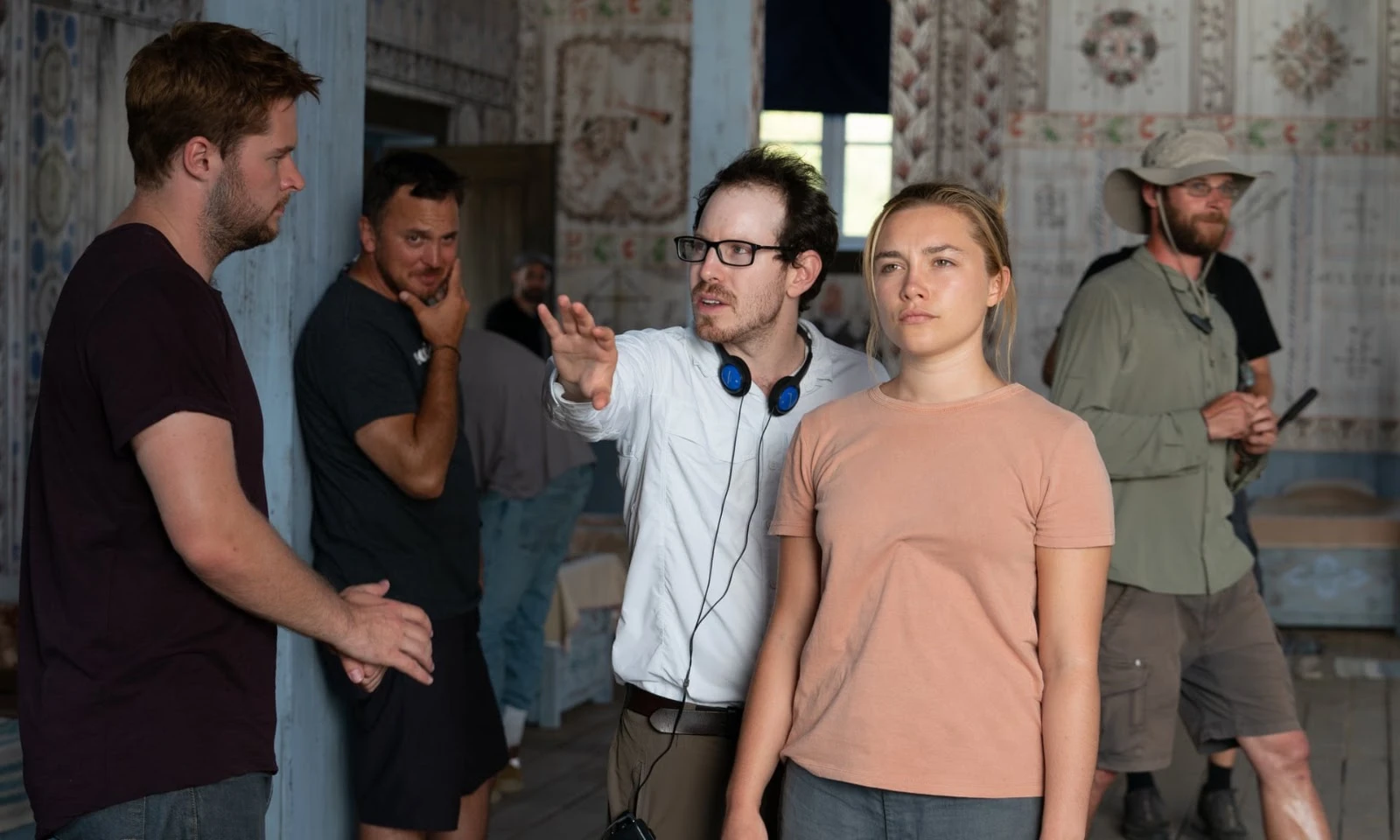
Source : Merie Weismiller Wallace
After revisiting both films back to back, I can recall wanting to sit Aster down to ask him if he was okay, seriously. We all have films and filmmakers that move us to unknown places after viewing, but the depths and places that Ari Aster must have gone to create such compelling works of art are unfathomable. What I enjoy most about both films is the use of catharsis with the main protagonist. Both Dani and Annie have a dramatic moment of reckoning with their emotions. Annie, with the death of the mother, daughter, and the haunting grief she is experiencing while trying to convince her family that she has not lost her mind; and Dani, with the insensitivity of Christian, the death of her immediate family, and actualizing what she is experiencing during the Hårga rituals. Aster takes tragedy to a new level in both films while allowing the viewer to empathize with the raw human emotions of grief and loss.
You get to see the human monstrosity unfold during the last few shots of each film with the main protagonist. In Midsommar, it was apparent that Christian was the main antagonist; from his intentional manipulation towards Dani before and during the Hårga trip , to him stealing his friend’s thesis because he was unsure of his purpose with his studies. Aster makes Christians” stance forward throughout the film so much that you begin to root for Dani when Christian misfortunes begin to unfold in the film’s climax. After Dani is crowned May Queen, it seems as if she has found a new family, a sense of self-expression, and a chance to avenge for the wrongdoings of her toxic relationship. As she stands there and we see the frown of confusion turn to a grin of satisfaction as Christian and his friends burn alive, you cannot help but root for Dani but also be concerned with her well being in the hands of these cult members. On one hand , her grin represents relief but also madness, grief, disparity, and manipulation that lead her to that exact moment. In Hereditary, Annies’ monstrosity is more literal and apparent after she is possessed by Paimon to capture Peter. You can see the silent screams of terror turn into a feeling of relief as the demon overtakes her spirit, and at that moment all of her stresses of what her life has become disappear, and her focus is on capturing Peter, which leads to her death. Horror is no stranger to bleak endings, but both Hereditary and Midsommar leave you hopeless. The last forty-five minutes of each film leaves no room for relief for the viewer. We are simply left empty.
Ari Asters’ distinct cinematic technique and attention to detail turned a family drama and a breakup film into two of the scariest films of the late 2010s. Aster himself said, “I enjoy turning things on the audience. I really like working in genre because people come into the films with certain expectations. They know the tropes so well that, when you turn on those, it can be shocking because there’s a complacency that comes with watching those films.”
I just hope that he is okay.
KyFx Horror Group, LLC..
Houston, TX